
First impressions are important! Here are some pics of a Reaction X (long nose) straight out of the box
along with some of my comments. Overall, this is a magnificent product. The glass work is immaculate, the
finish is smooth and glossy, the glue joints are sound and strong. I am proud of my simple, all-wood Reaction 54
design, but PST has taken the Reaction concept to a new level. The engineering is impressive and the workmanship
is first-rate.
|
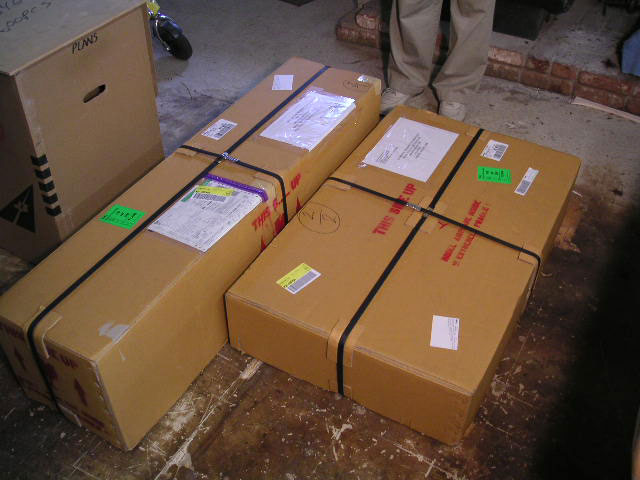
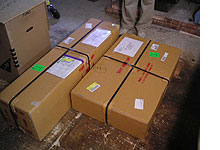 THE ARRIVAL!
I'm not normally an ARF builder, but have to admit it is always exciting when the FedEx truck
arrives with these two big boxes from Thailand. The contents are packaged beautifully and protected
well with all sorts of bubble wrap, newspaper, and foam. You can pretty much count on your model
arriving safely. So let's dig in...
|
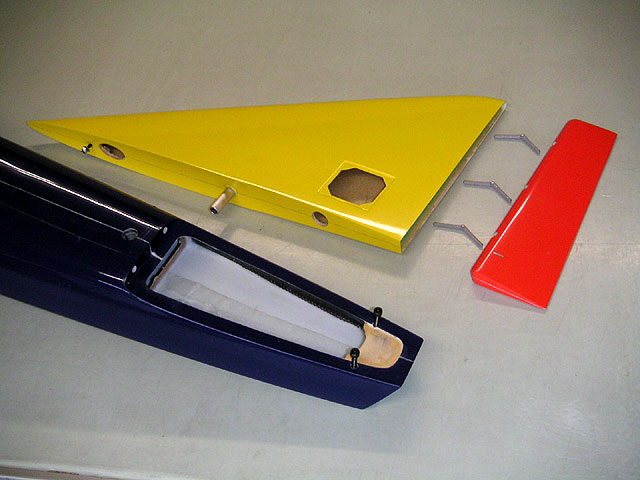
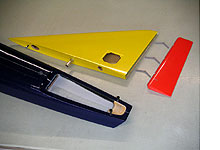 FIN AND RUDDER
Light and accurate. The rudder is the only control surface that the builder has to hinge. Three
point-style hinges are included in the kit. Also included are super-strong fiberglass control horns that
need to be epoxied into all of the control surfaces by the builder.
|
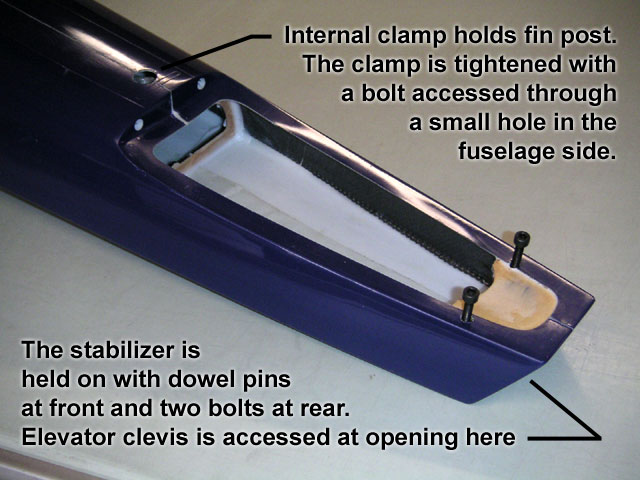
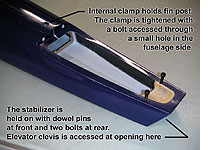 REMOVABLE TAIL
When the ARF was introduced, the vertical and horizontal
stabilizers were meant to be glued in place. At the request of customers, PST re-designed them to be
removable. The new removable tail is now a standard feature (no extra charge!), but you can still glue
the tail on if you wish.
|
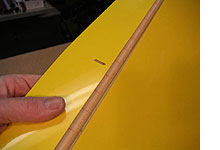 LIVE HINGES
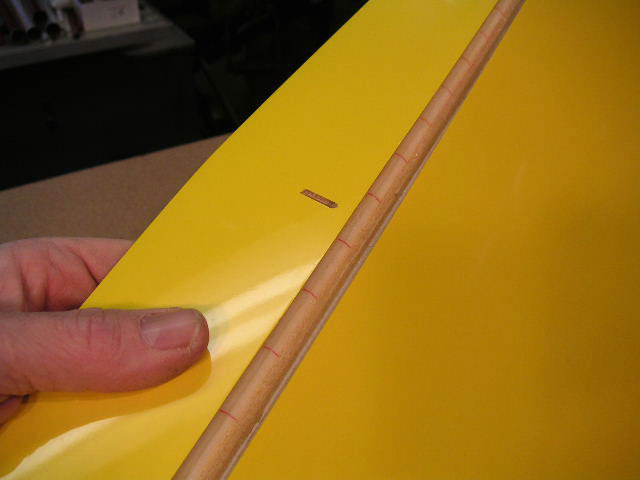
Here's a view of the stabilizer bottom, with the elevator flexed open to show the live hinge. The
hinge is actually the molded fiberglass top skin, which is incredibly strong and aerodynamically clean.
Live hinges are also used for the ailerons and flaps. Note the small slot in the bottom of the elevator
for the machined elevator horn.
|
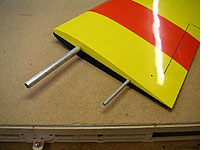 WING JOINER TUBES
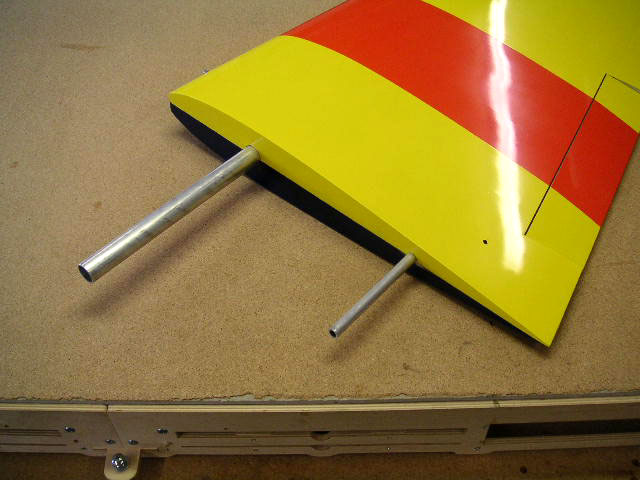
The shiny, smooth finish on this model resulted in reflections from my overhead lights in most of the
photos, sorry. The two-piece wing is joined using two aluminum tubes, then attached to the fuselage
with dowels and bolts. For the technically-minded, it should be noted that the Reaction 54 wood kit uses
a semi-symetrical airfoil with a flat spot on the bottom to make building easier. The ARF uses a pure
symmetrical airfoil.
|
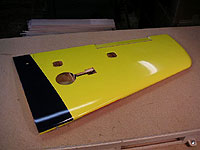 WING BOTTOM
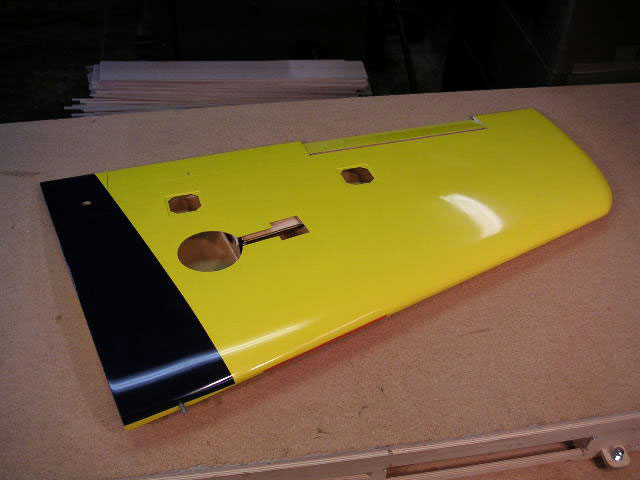
An overhead shot of the wing bottom surface clearly shows the cutouts for the aileron and flap servos.
Thick fiberglass plates are provided as hatch covers/servo mounts. Threaded steel pushrods with Sullivan
4-40 clevises are provided for linkages.
|
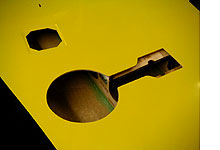 WHEEL WELL
The main landing gear are bolted to heavy plywood beams built into the wing. Of course, the PST units
are a drop in fit as are the Pro-Links retracts from Dreamworks. Other retracts may be used like Robart
or Spring Air, but the struts will probably require some modification to make them the proper length.
|
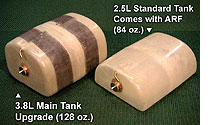 MAIN FUEL TANK OPTIONS
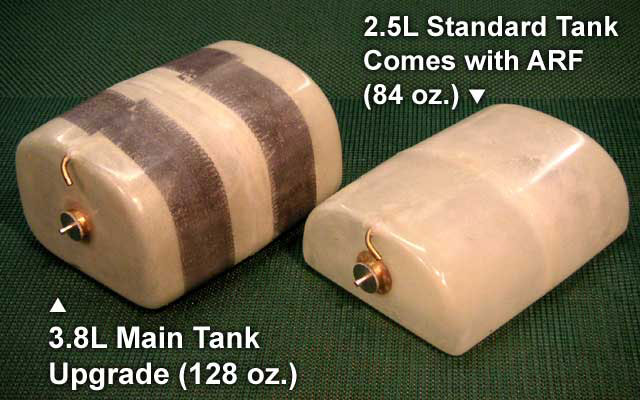
The standard main fuel tank (2.5 liter) is custom molded to fit in the rear fuselage. It sits above the wing, right
on the CG, so trim does not change as fuel is burned. PST offers a variety of fuel tank and smoke tank options,
including a 3.8 liter (1 gallon) main tank.
|
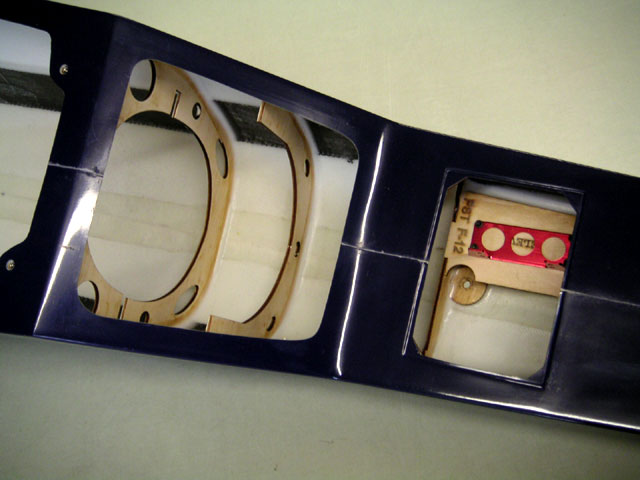
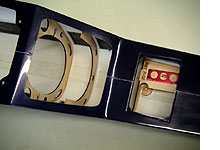 REAR FUSELAGE, ENGINE MOUNT AREA
The two bulheads shown here take the thrust loads. The actual turbine mounting rails are laser-cut from
plywood and supplied in the kit, but they must be glued in by the builder. PST did this so that the rails can
be trimmed before installation to fit a variety of powerplants. As supplied, the rails fit the PST J800R. Cut
lines are etched in for the larger PST J1300R. There is lots of room for cool airflow into and around the
turbine. You can also see the metal elevator servo mount, installed just aft of the turbine.
|
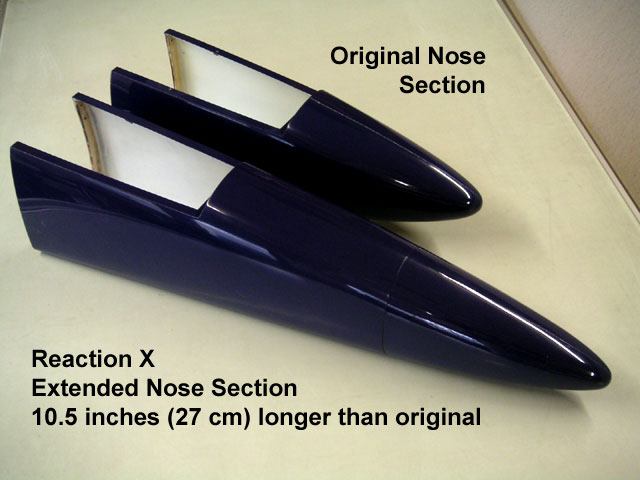
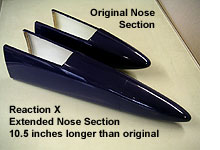 FRONT FUSELAGE
The fuselage is molded in two pieces to keep the shipping box a reasonable size. The front and rear
fuselage sections simply bolt together. The Reaction X features
an extended nose section, but the original shorter nose is still available; same price either way.
(My dirty little secret: I still prefer the looks of the snub nose.)
|
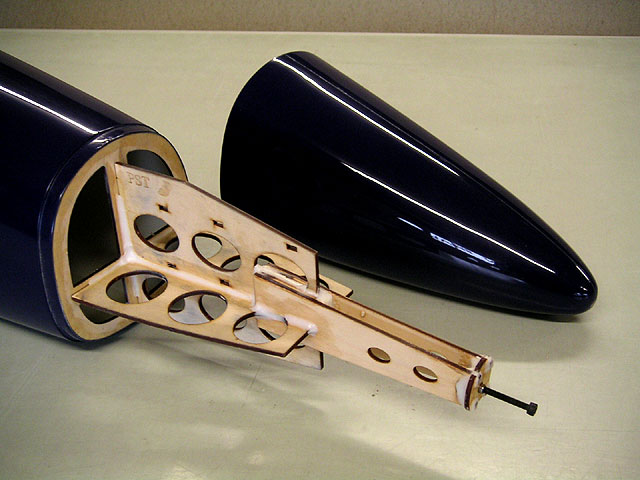
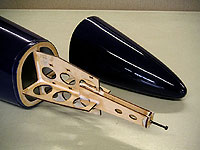 NOSE CONE
The extended nose section features a removable nose cone that slides off with the removal of one screw. This
provides a convenient place for your batteries, which need to go in the nose for balance. (The original short nose
version typically needs over a pound of nose weight.)
|
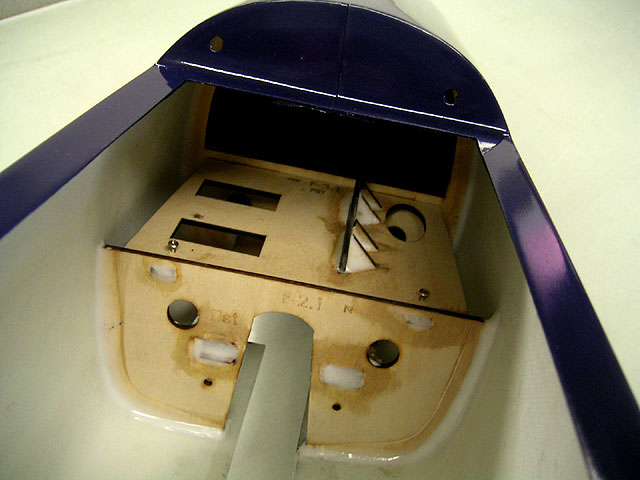
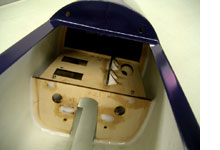 FRONT FUSELAGE, VIEWED LOOKING FORWARD
A rugged plywood box in the nose serves for mounting the nose wheel retract, the retract and brake servos,
and their respective valves.
|
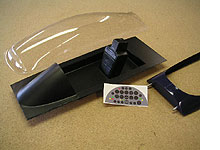 CANOPY PARTS
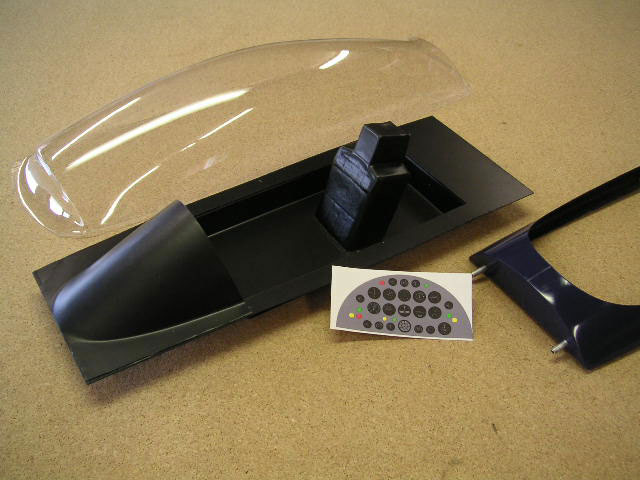
The Reaction ARF comes with a clear canopy, fiberglass canopy frame/hatch, and a
molded plastic cockpit. The printed instrument panel is a
nice touch, but creative builders will go far beyond that and add lots of details. Oh, and I know it's
just a sport jet, but that big bubble canopy screams out for a pilot figure.
|
|







 THE ARRIVAL!
 FIN AND RUDDER
 REMOVABLE TAIL
 LIVE HINGES
 WING JOINER TUBES
 WING BOTTOM
 WHEEL WELL
 MAIN FUEL TANK OPTIONS
 REAR FUSELAGE, ENGINE MOUNT AREA
 FRONT FUSELAGE
 NOSE CONE
 FRONT FUSELAGE, VIEWED LOOKING FORWARD
 CANOPY PARTS